
Ignoring your hits
On a small site you are often your own biggest visitor. Every draft preview, every check that the footer still looks right, every reload after a deploy — none of it is traffic, and all of it is loud enough to bend a chart. Tinylytics gives you two ways to deal with that: a flag you set in your own browser, and rules that drop traffic before it is ever recorded.
Ignore this browser
Visit your live site once with the flag on the end of the URL:
https://your-site.com?tiny_ignore=true
If underscores are awkward wherever you are typing, ?ti=true does exactly the same thing. Include the https:// so your browser navigates rather than searching.
Tinylytics writes a flag into that browser’s localStorage and confirms it did. From then on, that browser is invisible to your own analytics and nobody else is affected. Because the flag lives in local storage, it is per browser and per device — so do it again in the browser you use on your phone, and again in whichever one you keep open for testing.
To start counting yourself again:
https://your-site.com?tiny_ignore=false
Clearing site data for that origin has the same effect.
There is also ?ignore on the embed URL itself, which stops that particular page load from ever sending a hit. It is handy in a staging template or a layout you know you will be reloading all afternoon.
Ignore rules
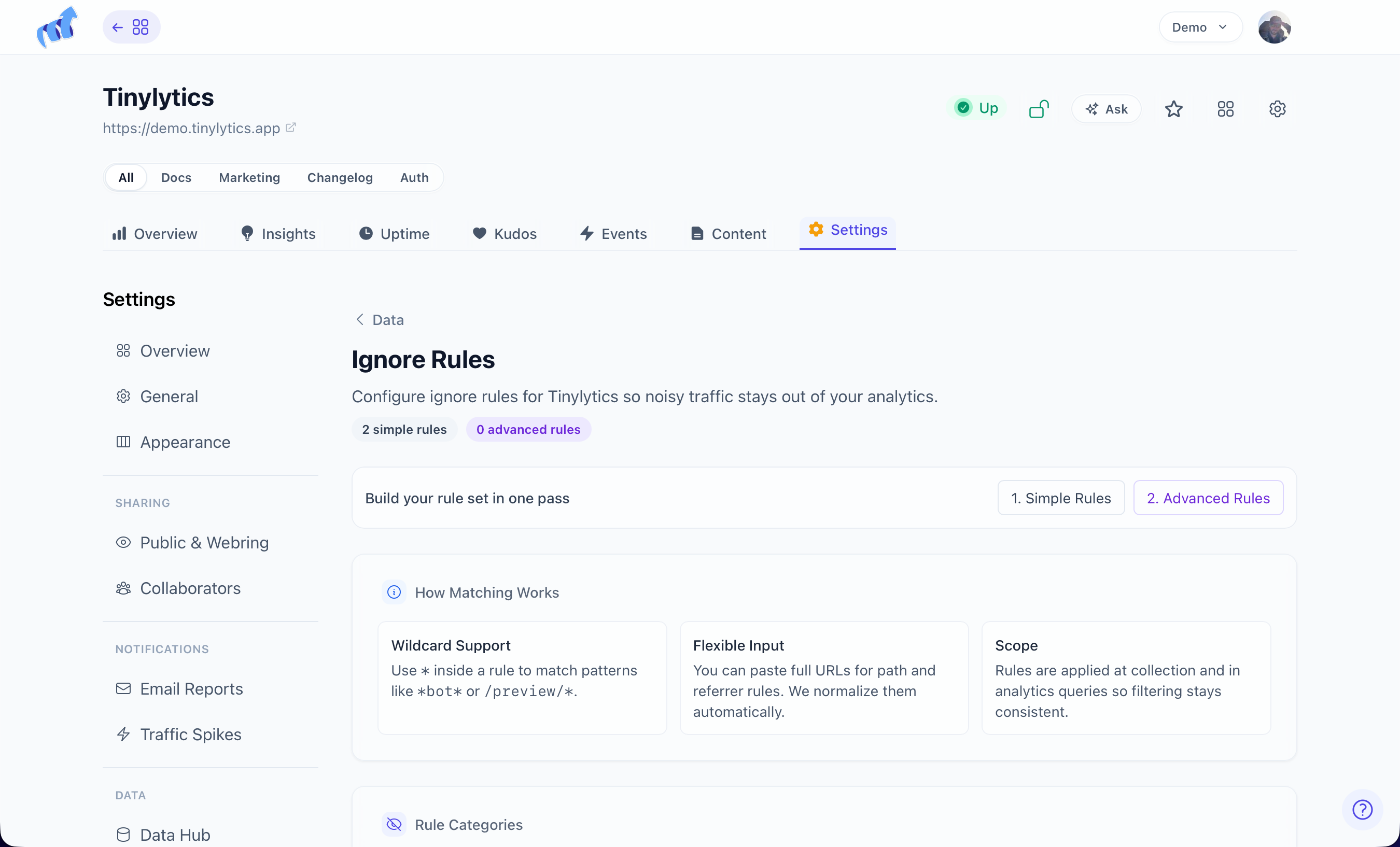
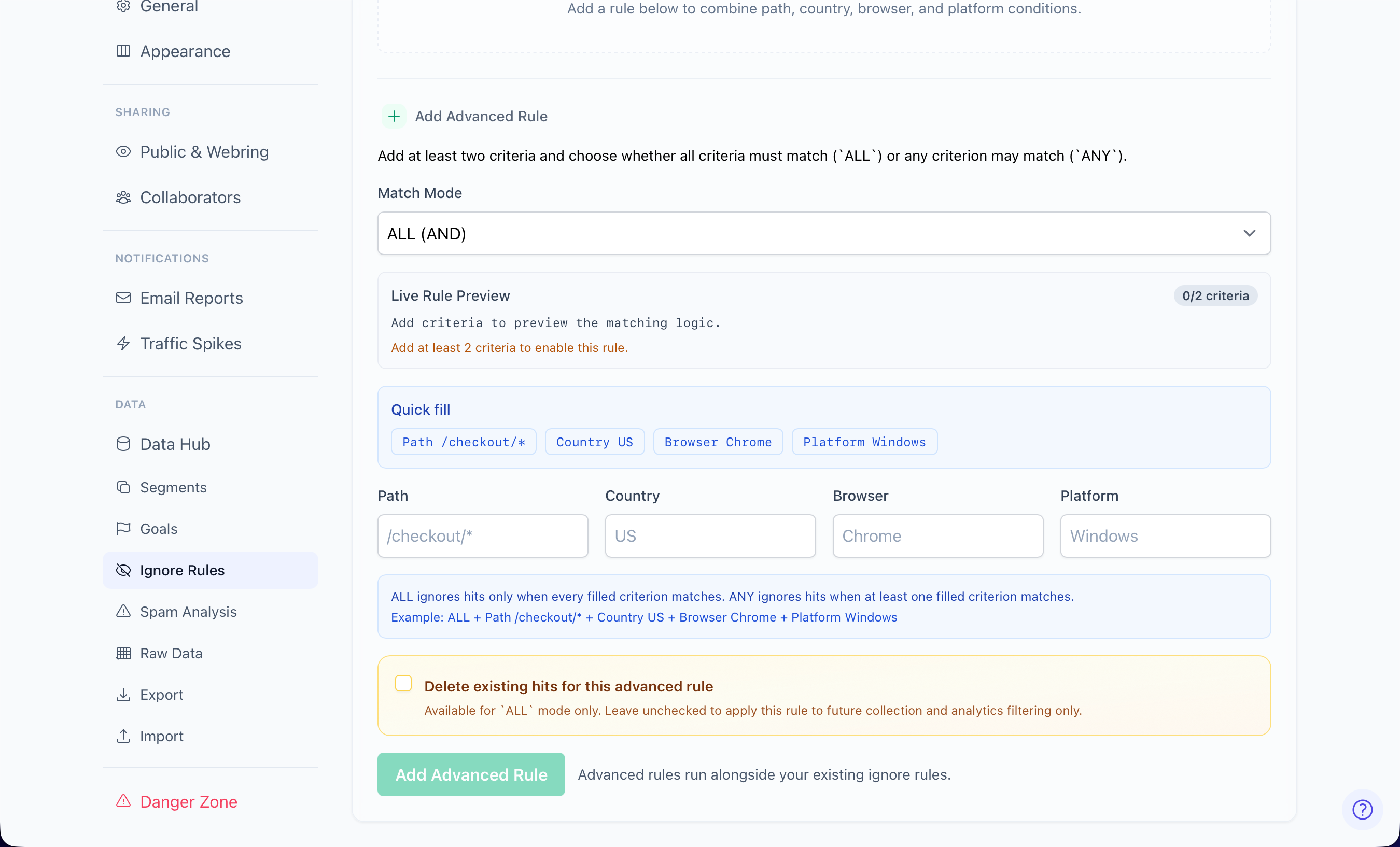
Ignore rules are for noise that will keep arriving whether or not you are looking: an /admin area, a preview host, your own site appearing as its own referrer, a country whose bot traffic you have stopped finding interesting. Set them under Settings → Ignore Rules, which is also linked from Settings → Data Hub.
Ignored hits are not hidden, they are never recorded. They stay out of Overview and out of the CSV export of all hits. That is worth knowing before you write a broad rule, because there is nothing to recover afterwards. Note that plenty of junk never reaches this stage at all — Cloudflare, the collector’s rate limits, and spam detection all sit in front of it.
Ignore paths or segments?
The two look similar and mean opposite things. An ignored path throws the traffic away. A segment keeps every hit and simply gives you a named view of that part of the site. So: ignore what you never want to see again, and segment what you want to look at separately.