
Find what keeps your pages out of search.
Ultra checks your homepage and 20 most visited pages for what keeps them out of search: titles, descriptions, canonical tags, noindex, social tags, alt text, language, viewport, structured data, robots.txt, and your sitemap. It also looks at pages people reach from search, AI crawler access, and broken links from content monitoring, then ranks the fixes by your own traffic. Audits run weekly, and you can get an email when a new high-severity issue appears.
How an audit runs
Press Run audit on a site's SEO tab. Tinylytics fetches your homepage, your 20 most visited
paths from the last 30 days, and up to five more pages people reach from search that are not already in that
list. It reads your robots.txt and sitemap, identifies itself as Tinylytics SEO Audit/1.0, and waits
half a second between requests to your site.
Your first audit turns on a weekly one. You can switch that off and still run audits by hand, up to one an hour.
What it flags
Findings are sorted into high, medium, and low. High covers what keeps a page out of search entirely: pages that cannot be fetched, error statuses, more than three redirects, robots.txt blocks, noindex, and a missing title. Medium and low cover descriptions, headings, canonical links, duplicate titles, responses slower than two seconds, social tags, alt text, structured data, compression, and more. A separate info level notes which AI crawlers your robots.txt blocks, without counting it as a problem.
The fix list
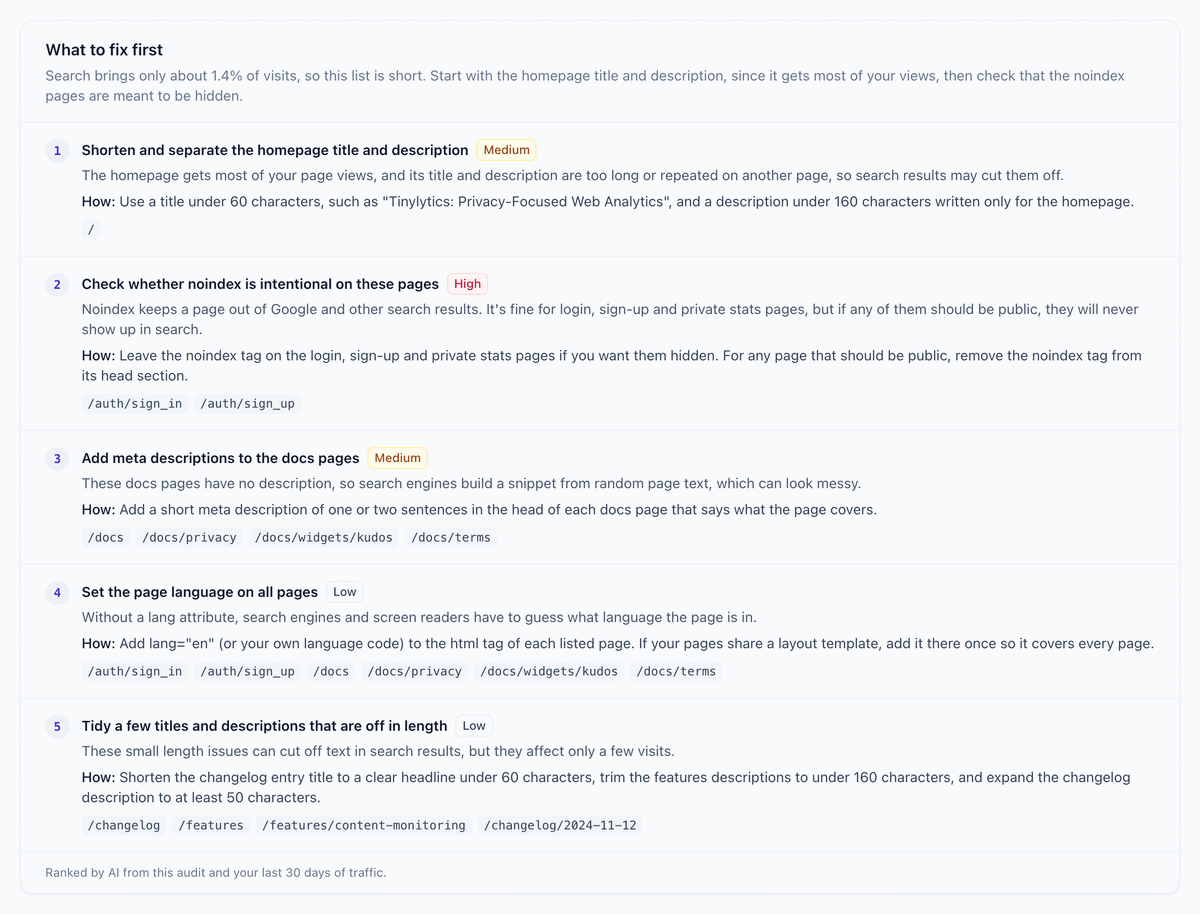
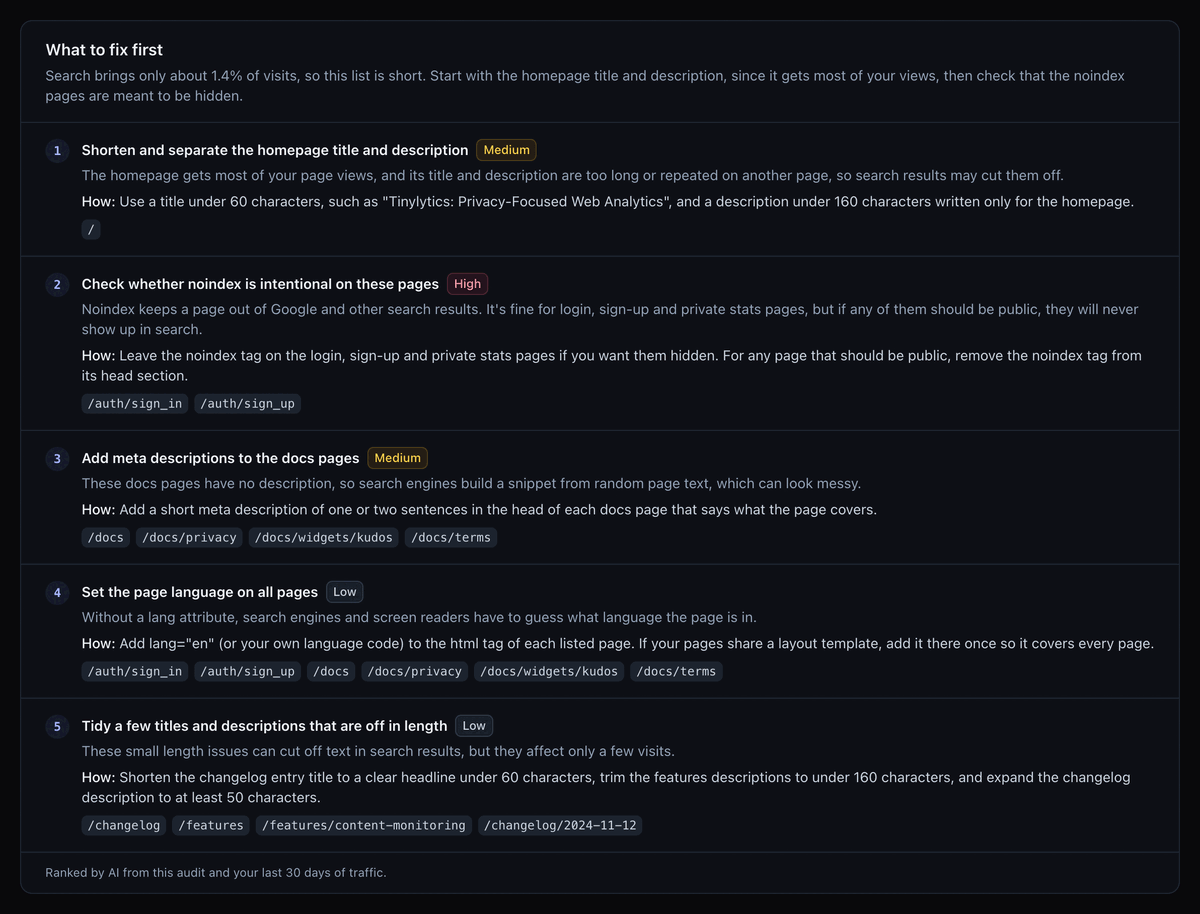
After each audit, the findings become a short summary and up to seven fixes. The ranking uses your traffic, so a problem on your busiest page comes before the same problem on a page nobody reads, and visits from search count twice. Each fix is checked against the audit before it is shown, so it never points at a page or issue that is not in your results.
Staying on top of it
Fixed a page? Check it again on its own instead of running a whole audit. Dismiss findings that are on purpose, like a noindex thank-you page, and they stay dismissed in later audits. Turn on email to hear when an audit finds high-severity issues the one before it did not.
With content monitoring on, the broken links it has found appear on the audited pages too.